Julia West House
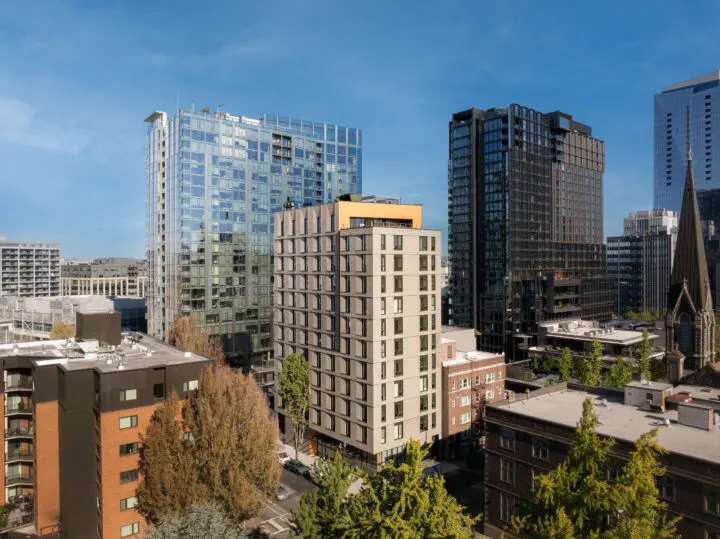
A Mass Timber Permanent Supportive Housing (PSH) building in Portland’s West End, Julia West House supports houseless elders by providing trauma-informed affordable housing and on-site services that give them the stability they need to thrive.
Project Details
Location
Portland, OR
Client
Community Development Partners
Year Completed
2025
Project Size
51,295 sq. ft.
90 units
Certifications
Targeting National Green Building Standard & Energy Star
Sustainability
The Mass Timber structure is eco-conscious, as it has a lower carbon footprint than a concrete or steel building of this size. The highly sustainable project is targeting National Green Building Standard (NGBS) certification, which assesses various aspects of green building, including site design, resource, energy, and water efficiency, indoor environmental quality, operations, and maintenance. Julia West House is also targeting Energy Star certification, which means it has to meet strict energy efficiency guidelines set by the U.S. Environmental Protection Agency.
Land Recognition
We have a responsibility to not only acknowledge but also elevate Native communities and their needs. This project sits in the area currently known as Portland, which encompasses the traditional village sites of the Multnomah, Wasco, Cowlitz, Kathlamet, Clackamas, Bands of Chinook, Tualatin Kalapuya, Molalla, and many other tribes who made their homes along the Columbia River. This building will serve elder Native residents through a partnership with the Native American Rehabilitation Association of the Northwest (NARA). NARA will collaborate with the County to identify and transition future residents into the building and provide services.
Educating ourselves is an important action. We encourage you to explore the stories of these communities through Native-led resources like David G. Lewis, PhD’s The Quartux Journal and Leading with Tradition.
Safe, Supportive, & Sustainable Housing
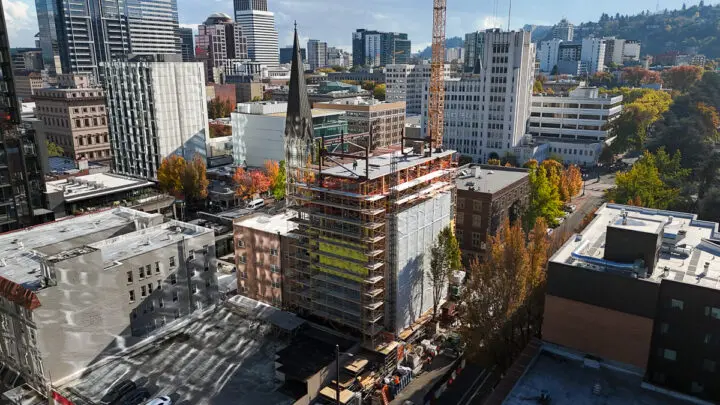
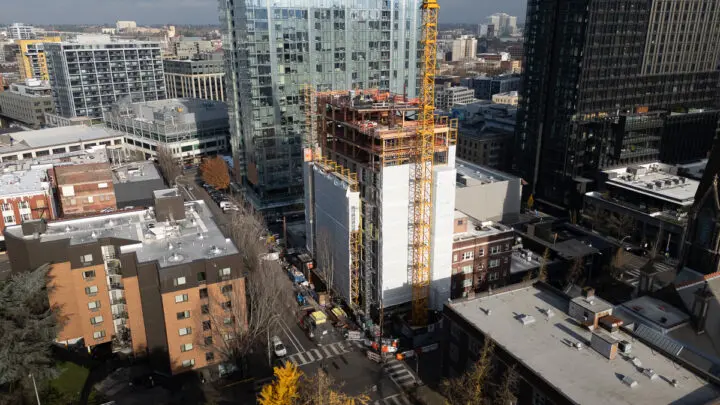
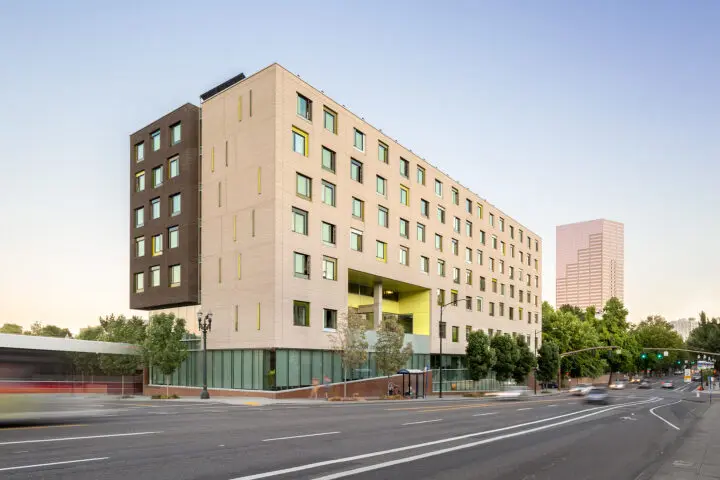
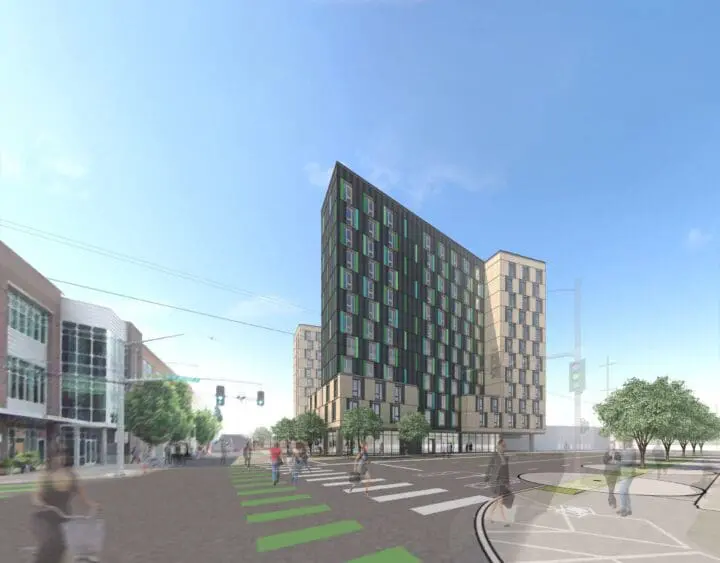
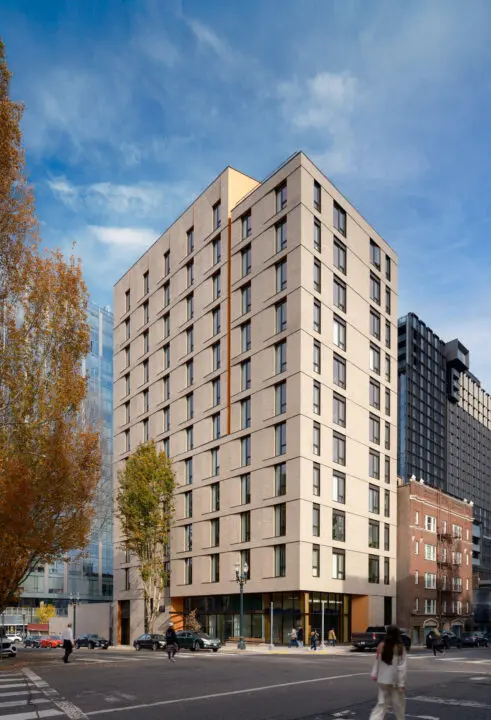
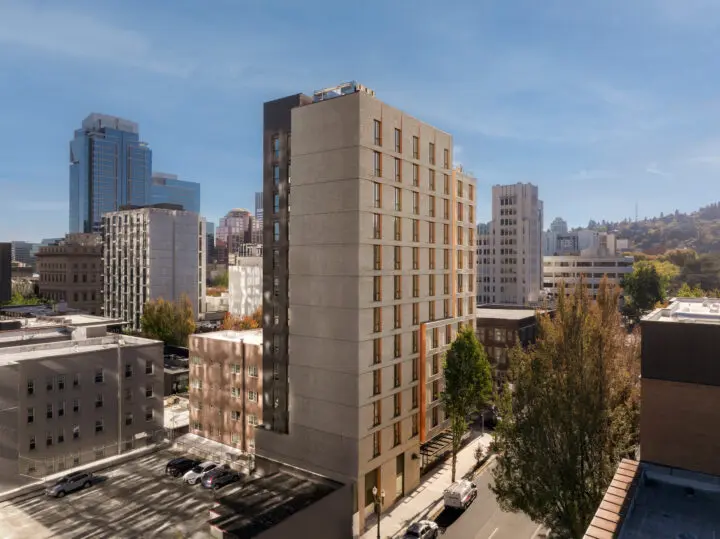
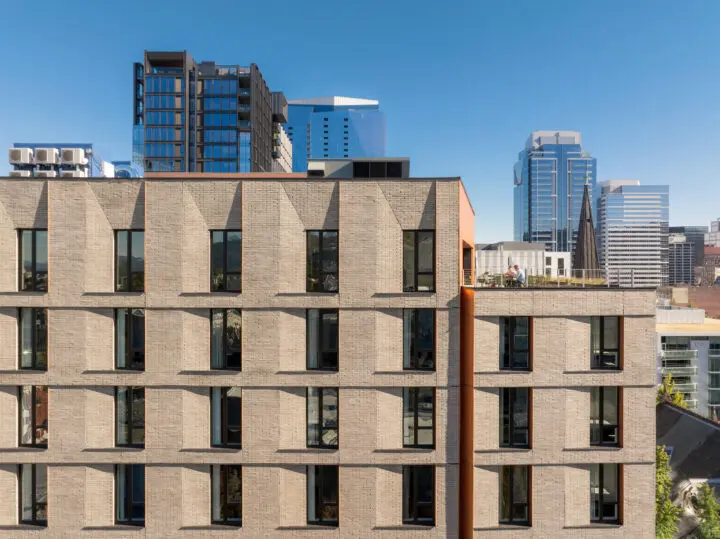
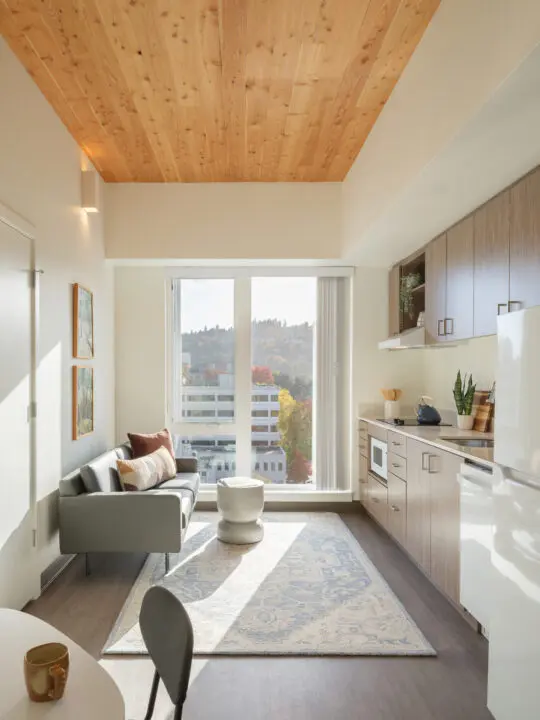
Julia West House is a 12-story cross-laminated timber (CLT) building featuring more than 50,000 square feet of housing, amenities, and services within its small footprint. It provides 90 units (60 studios and 30 one-bedrooms) of Permanent Supportive Housing. The community serves houseless BIPOC elders and individuals earning 30% or less of the Area Median Income (AMI), with on-site services to provide residents with support tailored to each household’s needs.

Natural Materials
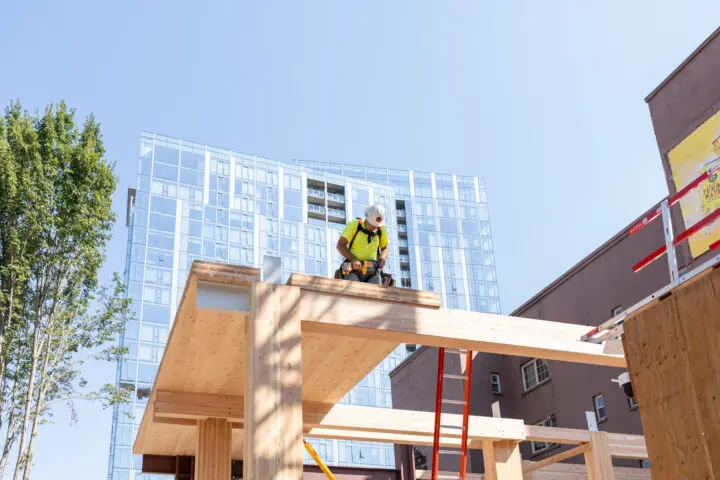
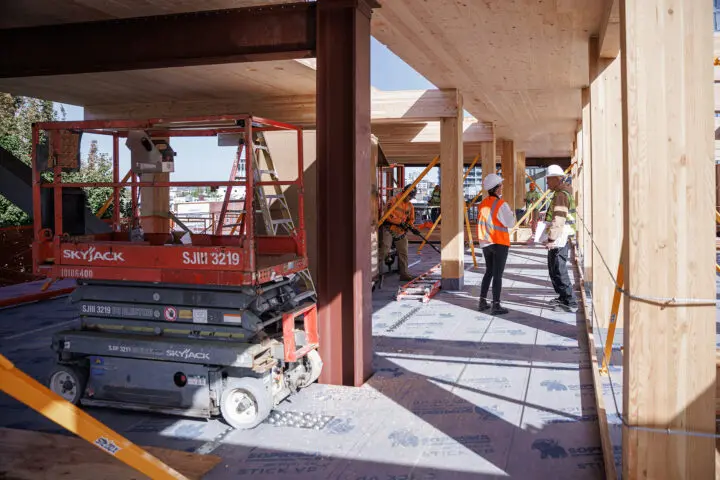
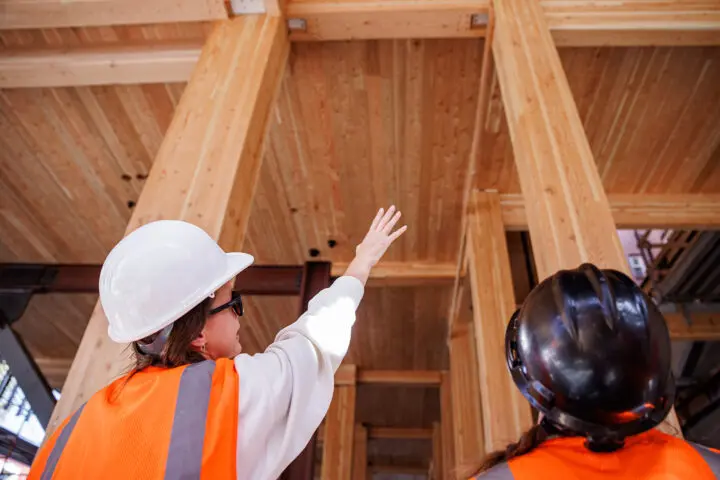
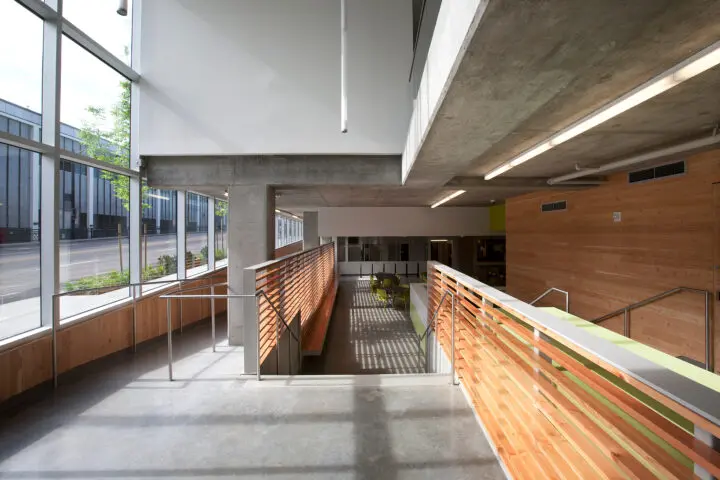
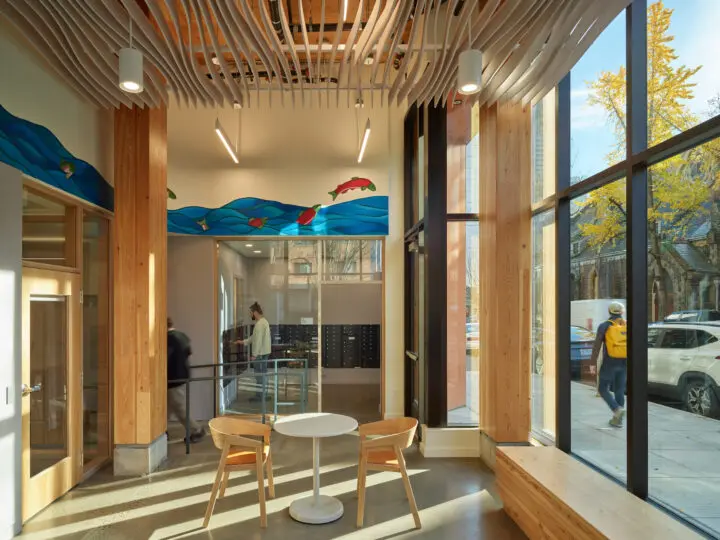
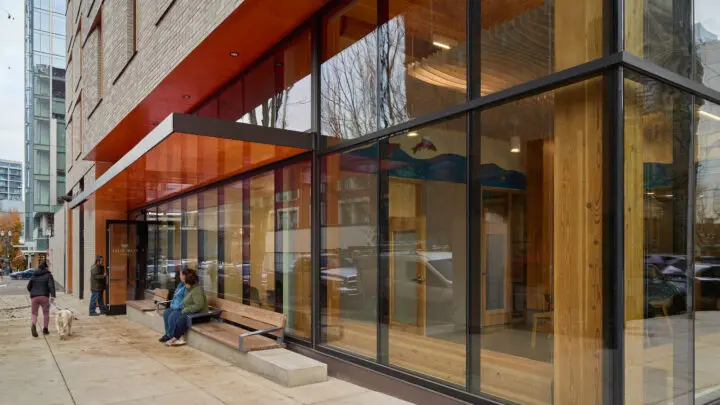
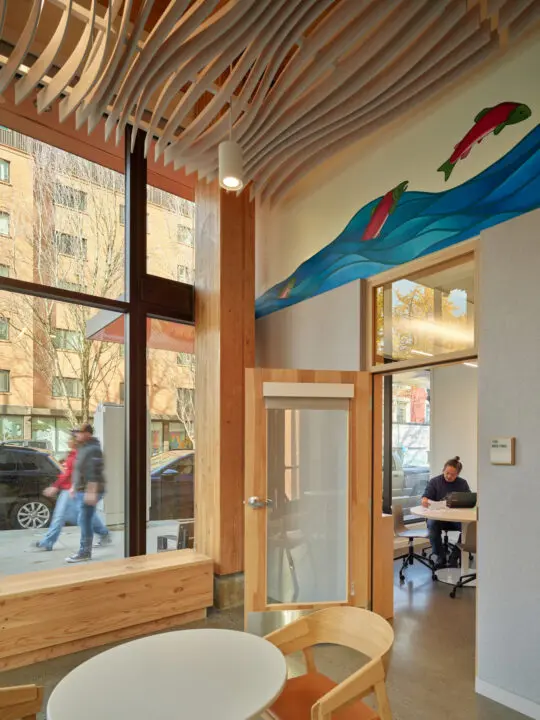
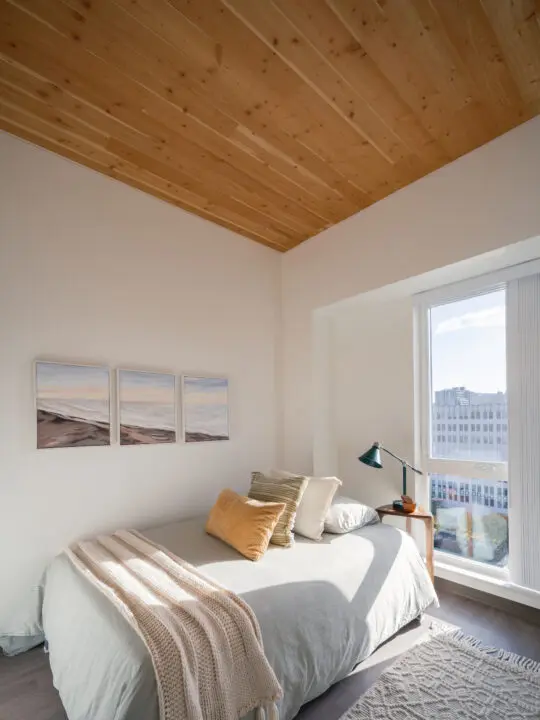
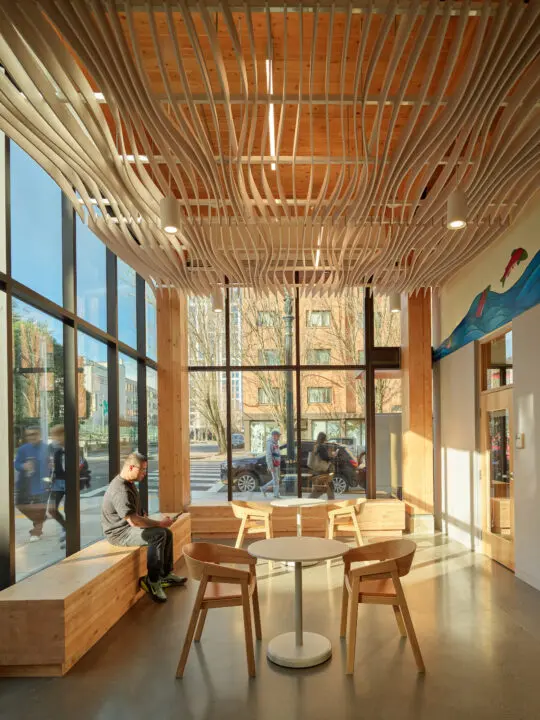
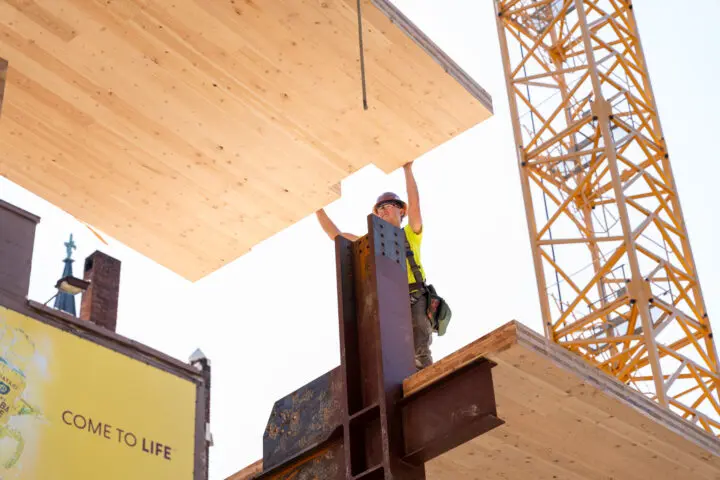
Julia West House is currently Oregon’s tallest Mass Timber building. The wood structure benefits the environment by having a lower carbon footprint than concrete or steel, which also contributes to the warm, natural material palette in the interiors—an important aspect of trauma-informed design. Wood ceilings and glulam columns are left exposed in the building’s interior, contributing to a warm material palette inspired by the Pacific Northwest’s local ecology. This extends to the units, where natural light is prioritized to create a calm and comfortable urban living experience.

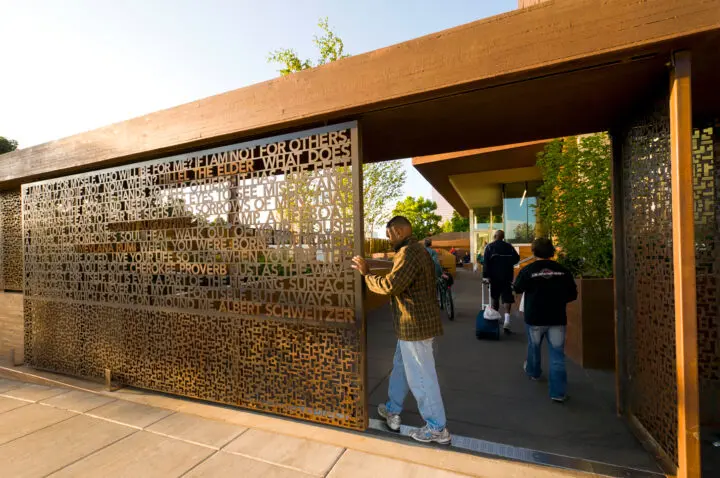
A Welcoming Entrance
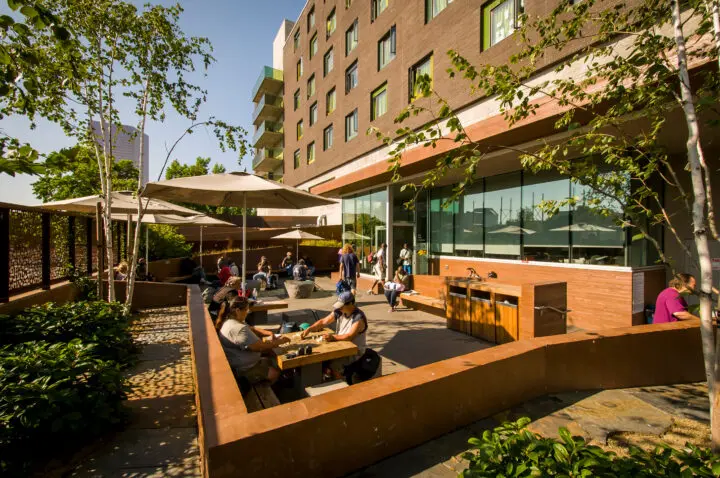
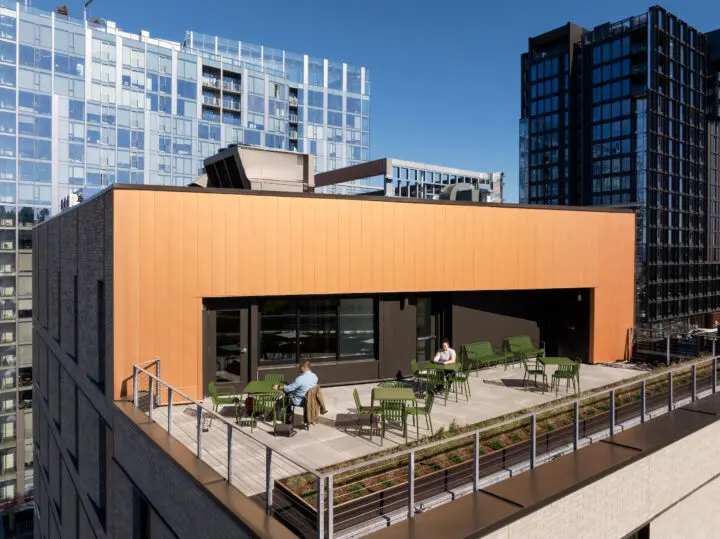
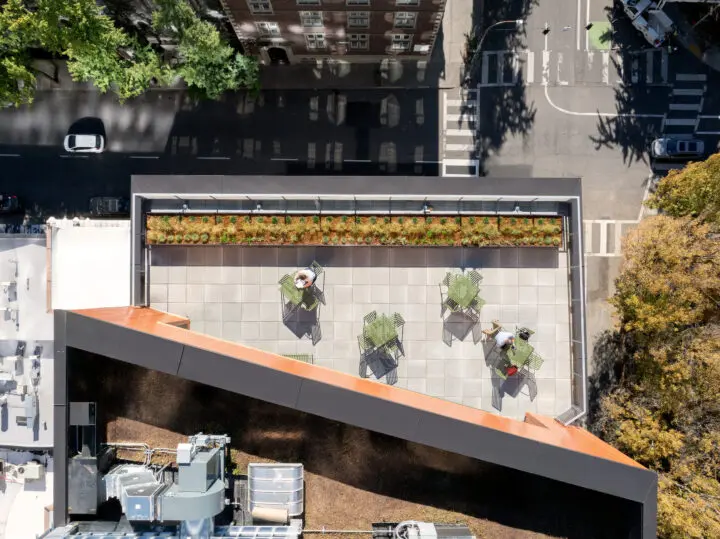
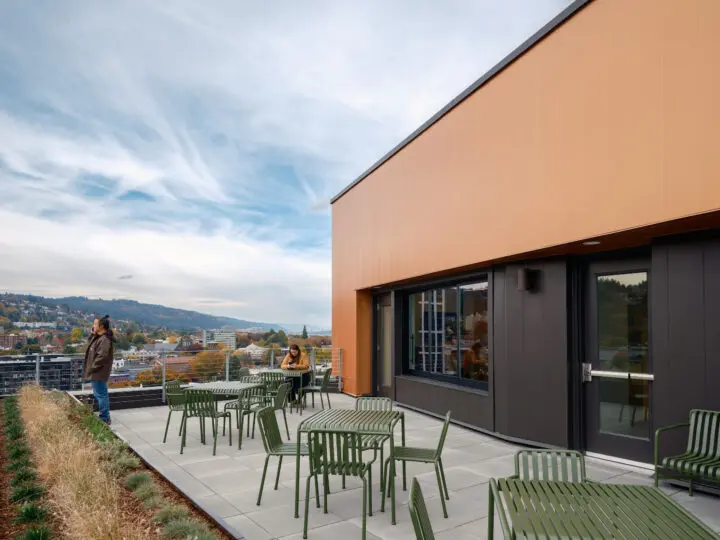
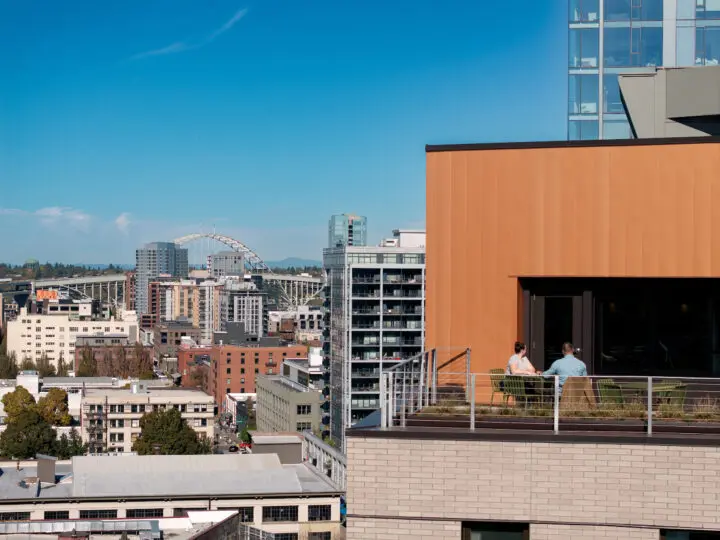
A ground-floor shade canopy and a roof-deck overhang provide residents with additional solar protection. Large windows recess into the subtle projection of the west façade, providing glimpses of copper metal paneling and additional shade for residents
.

Honoring the Community
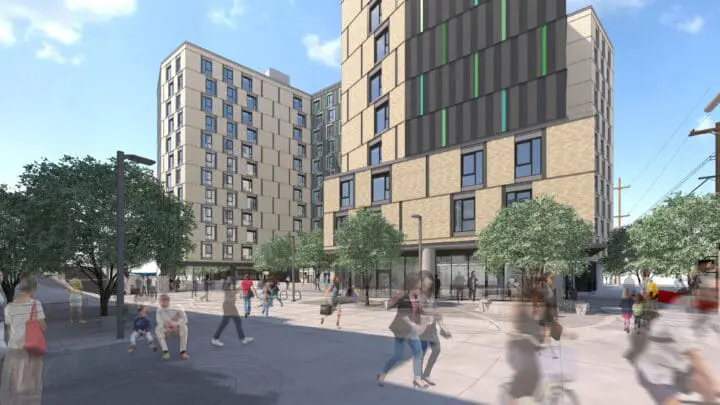
One goal of the project was to create a building that reflects the heritage of its inhabitants and honors the values that tie its community together. One way this is achieved is by expressing the building’s communal spaces on its façade as large carve-outs in its massing. Much like the historic communities that remained connected by traveling the ancient waterways of the Columbia River, these spaces are connected by a single, basalt-like crack that runs between them and adds a subtle articulation to the façade.
Support for Residents
Recent data shows that approximately 25% of the houseless population in Portland is adults aged 55 and over, with a disproportionate impact of homelessness on communities of color (2023 Oregon Statewide Homelessness Estimates). The 100% PSH community is designed to serve adults aged 55+, 45% of whom identify as BIPOC (Black, Indigenous, and People of Color). On-site service providers were selected to give residents support tailored to their needs. Case management services are provided by the Native American Rehabilitation Association of the Northwest (NARA Northwest) and the Northwest Pilot Project, with resident services provided by the Community for Positive Aging.
WoodWorks Julia West House Case Study
Download the WoodWorks Case Study on Julia West House to learn more about the mass timber structure.