Hillsboro Shelter
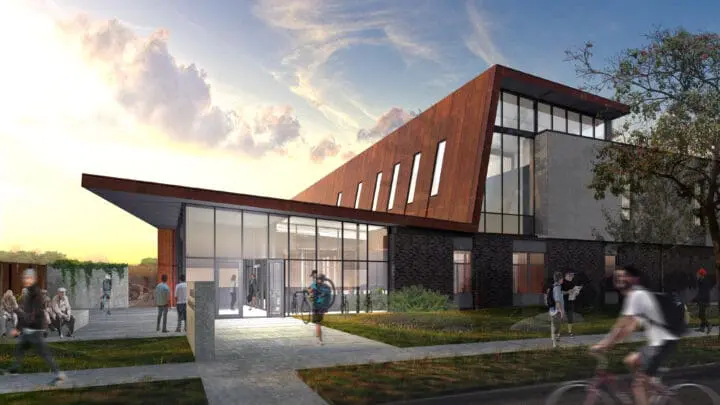
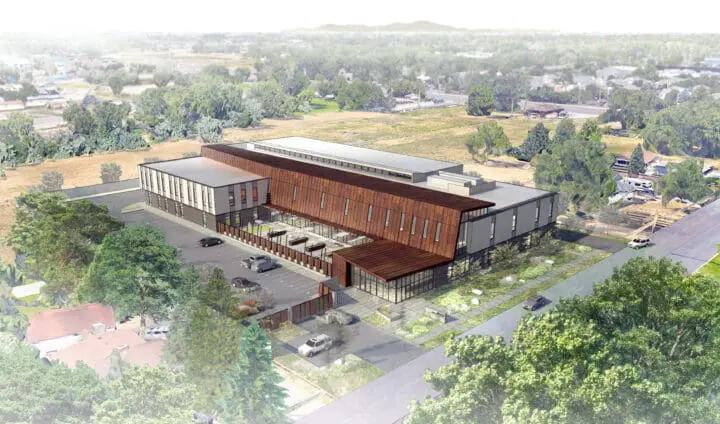
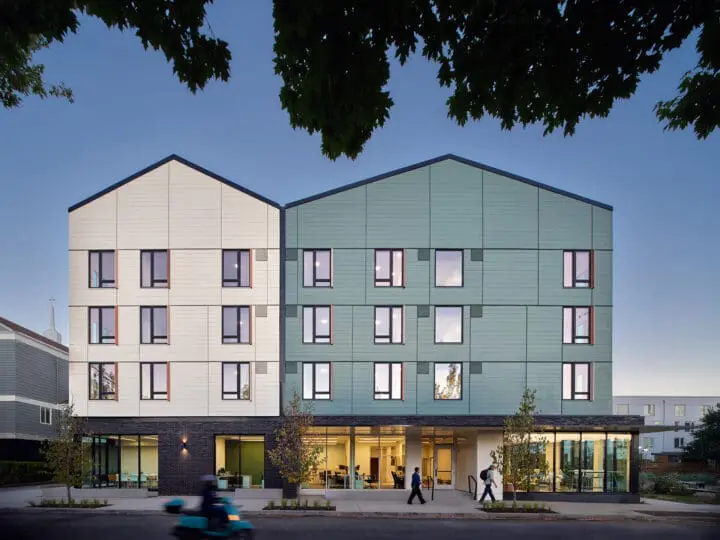
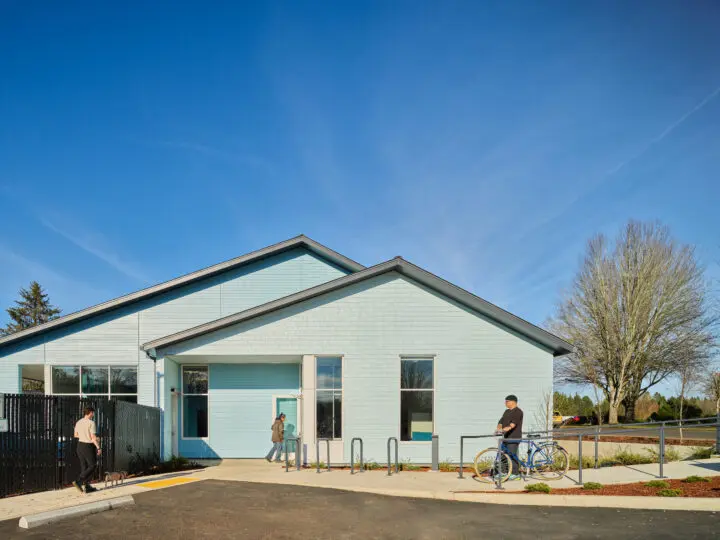
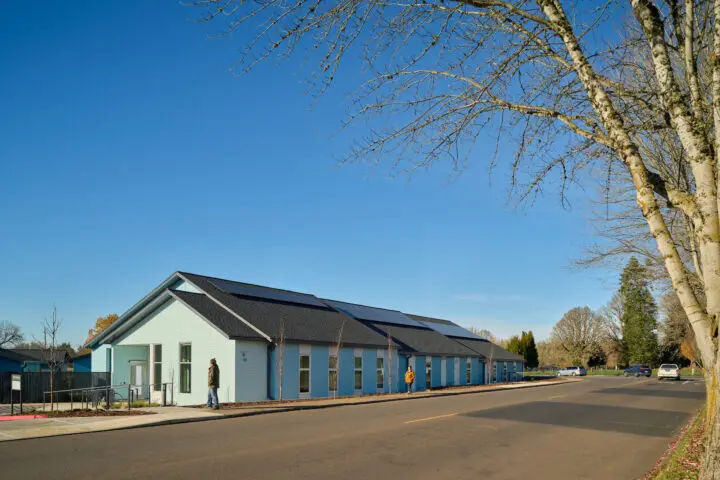
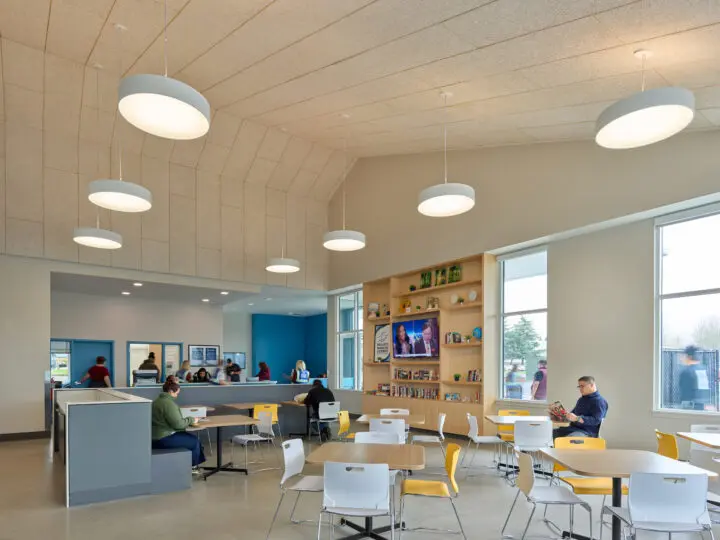
Located on the western edge of Hillsboro, Oregon, the Hillsboro Shelter provides congregate and non-congregate sleeping solutions and services for people experiencing houselessness.
Project Details
Location
Hillsboro, OR
Client
City of Hillsboro
Year Completed
2025
Project Size
13,400 sq. ft.
75 beds
Sustainability
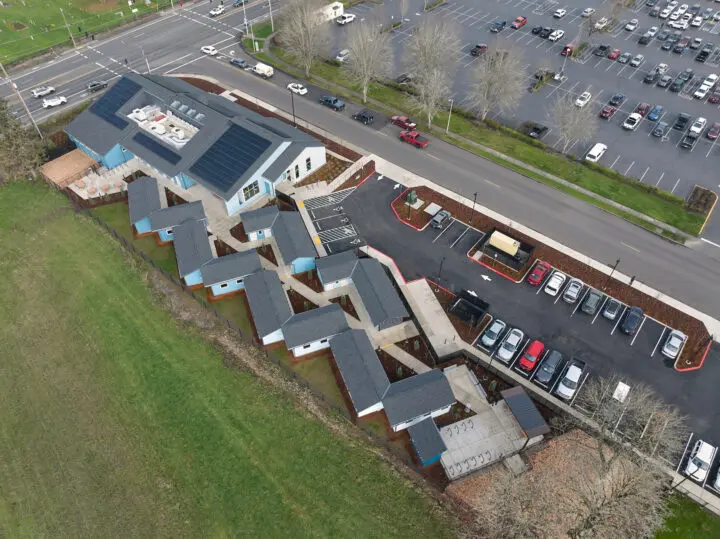
- 6 kW Photovoltaic Array
- All-wood structure
- South and west facing windows shaded by overhangs to reduce heat gain
Land Recognition
We have a responsibility to not only acknowledge but also elevate Native communities and their needs. This project is located in what is now known as Hillsboro, home to the Atfalati (or Tualatin) branch of the Kalapuya Tribe. This Tribe once lived across much of modern Washington County and some of northern Yamhill County. They collected foods in seasonal rounds and were rich enough in supplies to share their wealth via potlatch giveaways. Severe epidemics brought by settlers tragically and dramatically reduced population numbers in the 1700-1800s.
Educating ourselves is an important action. We encourage you to explore the stories of these communities through Native-led resources like Oregon State University Professor David G. Lewis, PhD’s The Quartux Journal, and by visiting the Chachalu Tribal Museum and Cultural Center.
A Compassionate Approach to Supportive Housing
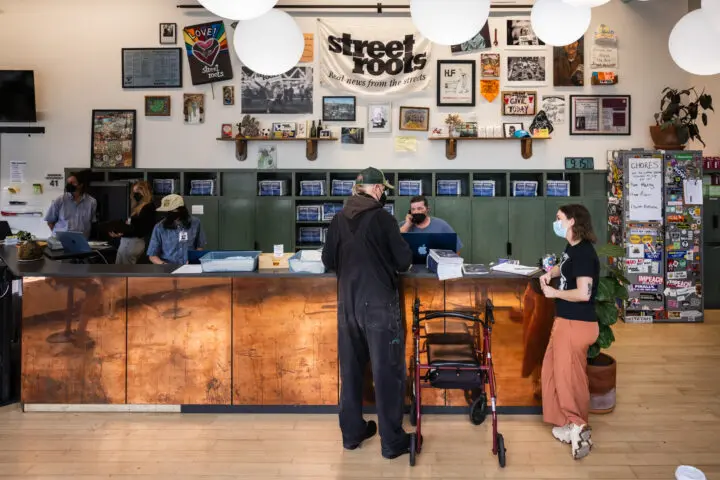
The Hillsboro Shelter provides 75 beds for adults experiencing houselessness, addressing a critical need for safe, supportive housing solutions. Services for guests support health and healing, with on-site meals, showering facilities, and laundry access. Staffed 24/7, 365 days a year by Project Homeless Connect, trauma-informed services are available for guests, with the goal of helping them eventually transition to permanent housing.
Shelter Hub
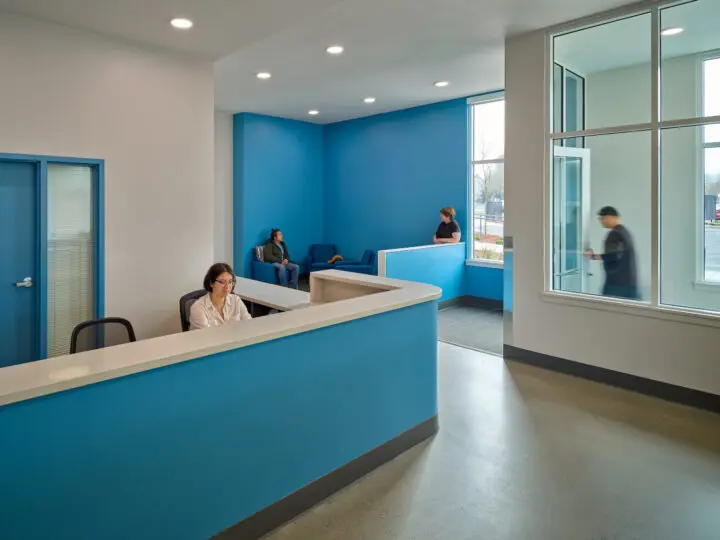
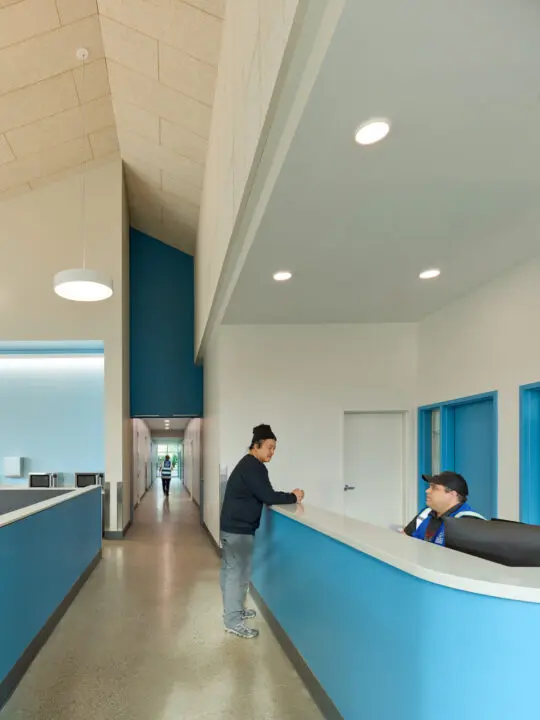
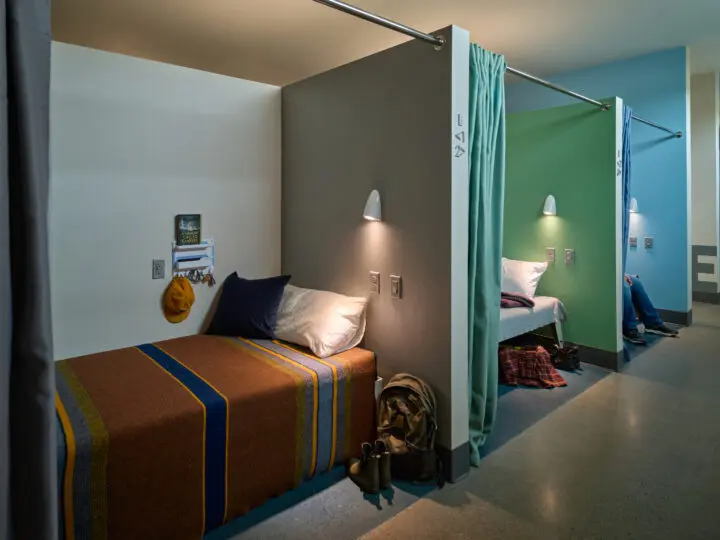
The Shelter’s main building is a touchdown spot for all guests. It provides 35 congregate sleeping beds, each located in its own individual alcove and equipped with a light, charging station, storage, and a curtain for privacy.
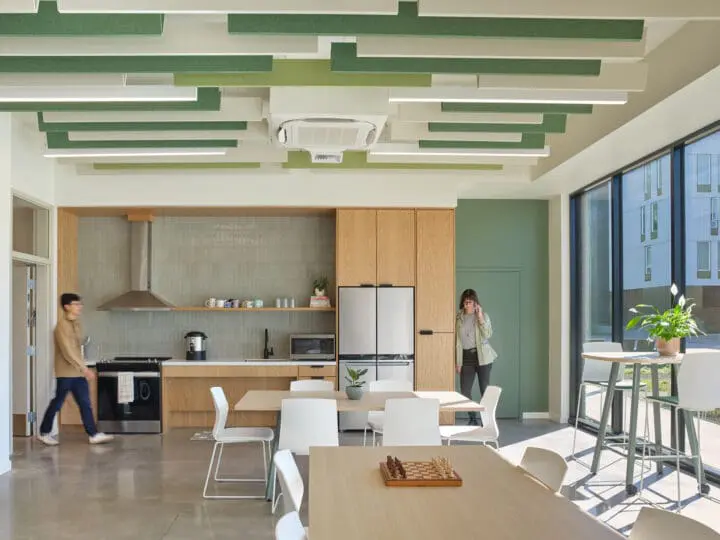
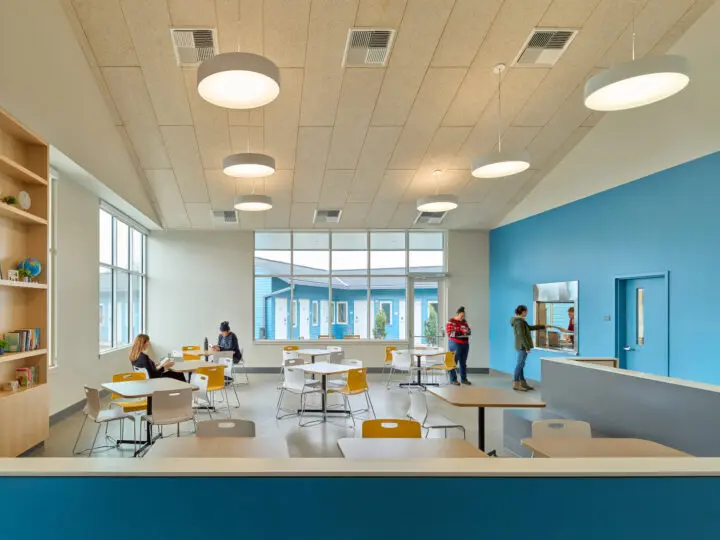
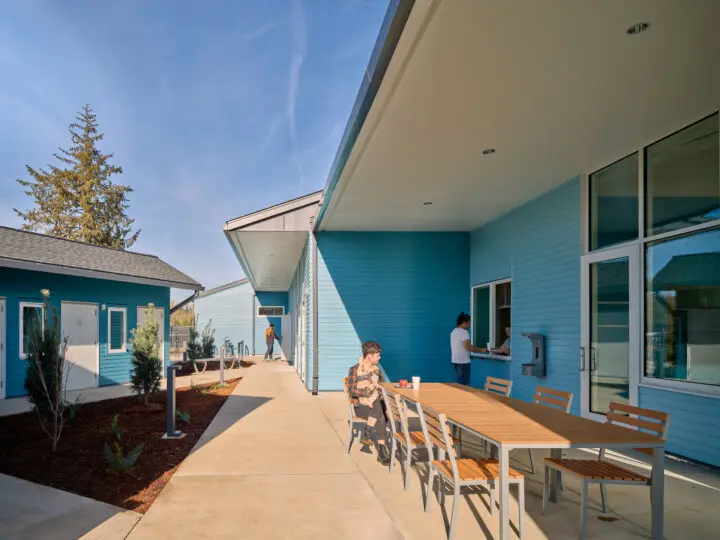
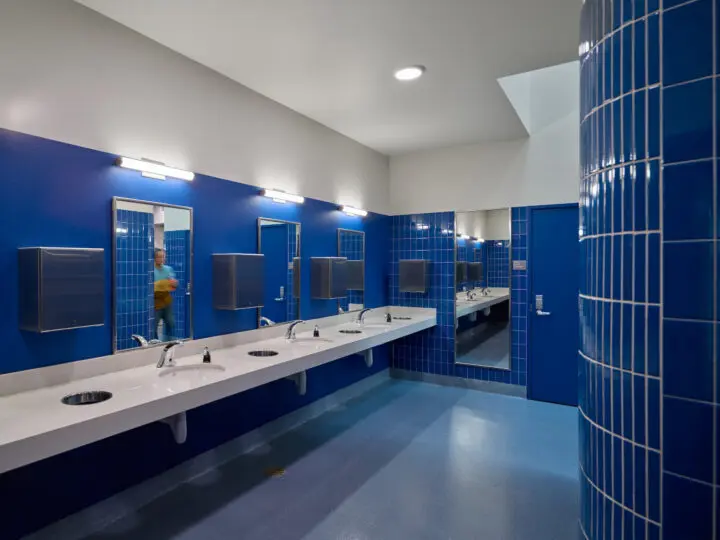
The building also houses a dining room, with a community lounge and a coffee bar, so coffee and snacks are available to guests throughout the day. Restrooms were designed for maximum safety and privacy, with individual shower and toilet rooms instead of stalls.
Everyone in Oregon should have a safe, secure roof overhead. This project is a critical piece of the puzzle to help those struggling with housing instability in Hillsboro.— U.S. Senator Jeff Merkley
Fostering a Stable Community
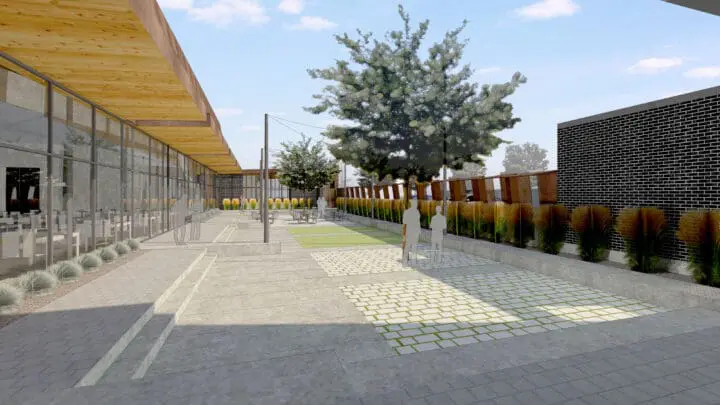
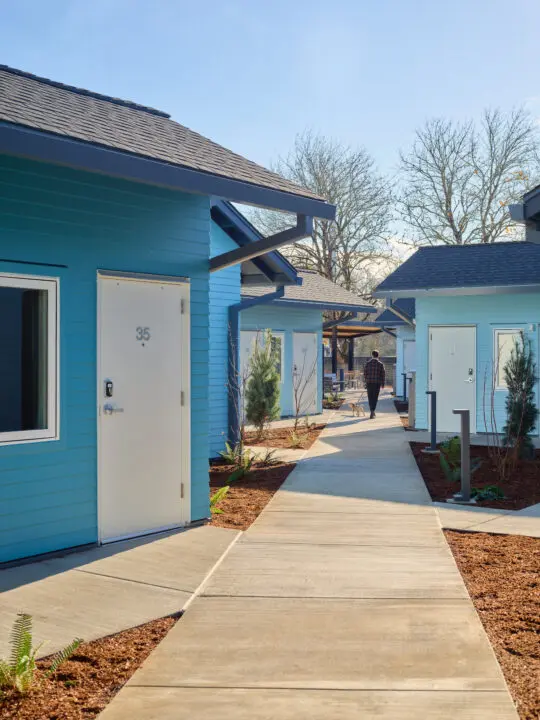
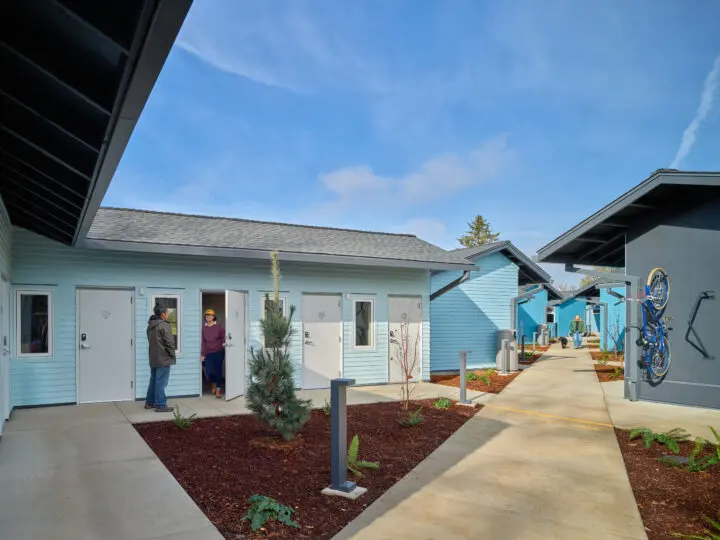
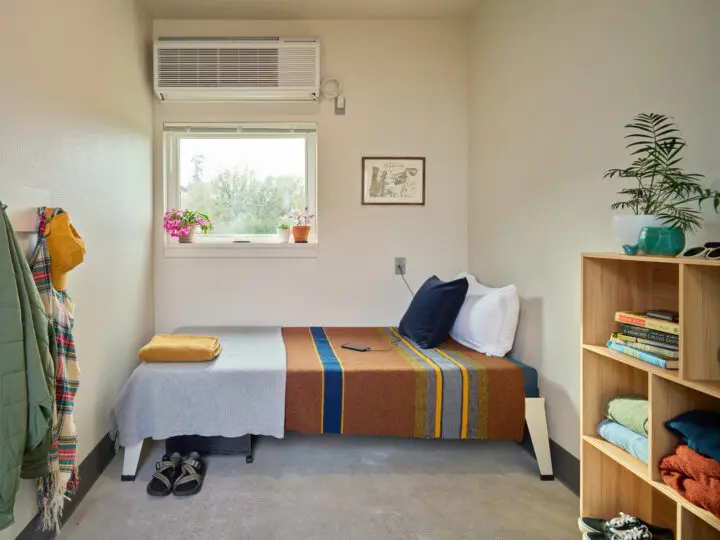
In addition to the main building, the Shelter includes 40 sleeping pods arranged around smaller courtyards on the site. The pods provide community, connection, and autonomy. The Shelter is also pet-friendly, allowing pets in both the pods and the main building, as well as in two on-site pet areas.

Trauma-informed Approach
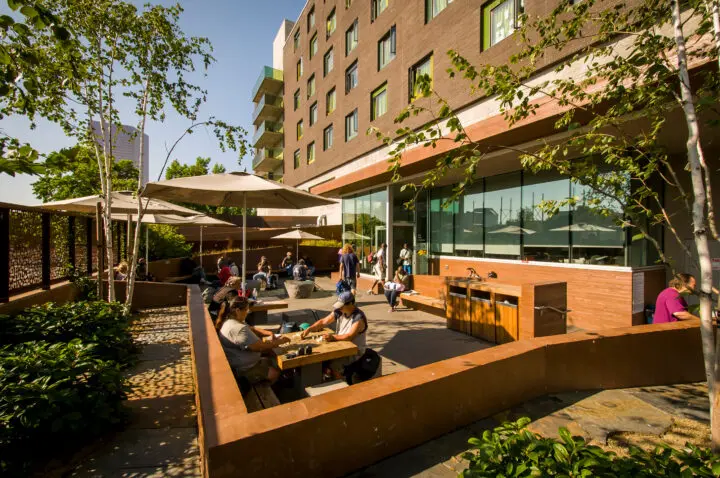
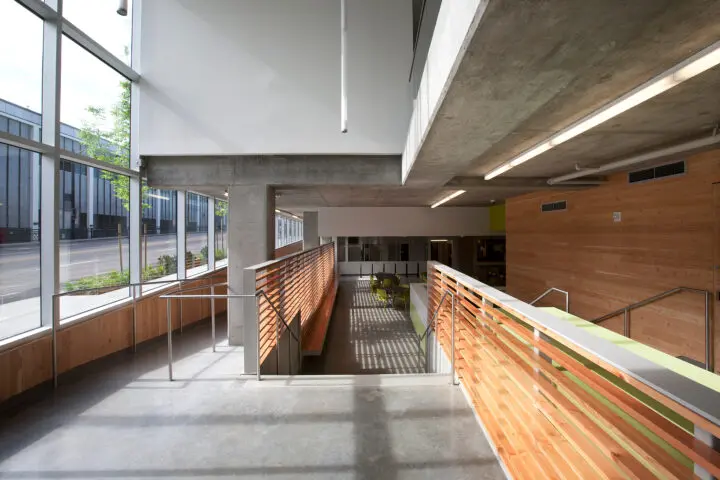
Trauma-informed design principles were implemented throughout the project to ensure that the Shelter is a safe and comfortable space for people to get back on their feet. Easy wayfinding and clear circulation informed both the layout of the site as well as the interiors. Wide corridors, no dead ends, and multiple exits support safety for staff and guests. The color palette is comprised of cool tones to provide a calming space, and windows provide natural light. Outside, lush landscaping was thoughtfully planted to create open places for gathering as well as more private, quiet spaces for respite. Large trees create a wooded feel in an urban environment.
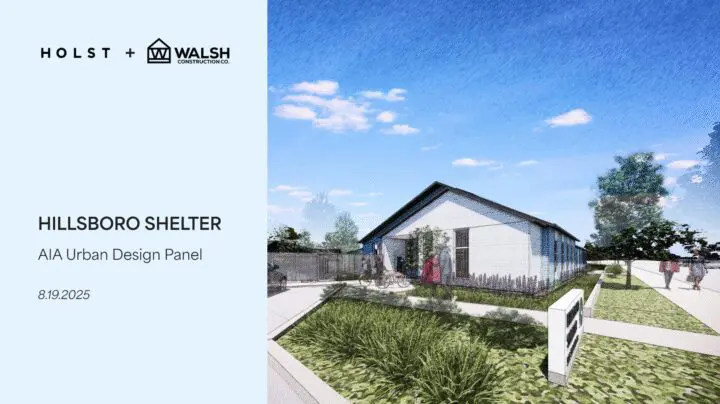
AIA Urban Design Panel Presentation
Click the link below to view the Hillsboro Shelter presentation for the AIA Urban Design Panel.